Are you a journalist looking for climate experts for COP30? We’ve got you covered

We’ve got lots of media trained climate change experts at the University of Bristol. If you need an expert for an interview, here is a list of our experts you can approach. All media enquiries should be made via press-office@bristol.ac.uk.

Cabot Institute for the Environment at COP30

We will have four academics in attendance at the Blue Zone at COP30 who will be available for media interviews. These are: Dr Alice Venn (climate law, loss and damage, just transition), Dr Filipe França (Amazon rainforest changes, deforestation, biodiversity), Dr Laurence Hawker (population mapping, flooding, climate hazards) and Dr Karen Tucker (indigenous knowledges). We will also have several academics attending virtually: Dr Alix Dietzel, Dr Katharina Richter, Dr Ailish Craig, Dr Ruby Lieber, and Stefan Zylinski.

Read more about our participation at COP on our website at https://bristol.ac.uk/cabot/what-we-do/projects/cop/

Action for Climate Empowerment & Children and Youth

Dr Dan O’Hare – expert in climate anxiety in children and educational psychologist.

Dr Camilla Morelli – expert in how children and young people imagine the future, asking what are the key challenges they face towards the adulthoods they desire and implementing impact strategies to make these desires attainable.

Dr Helen Thomas-Hughes – expert in engaging, empowering, and inspiring diverse student bodies as collaborative environmental change makers. Also Lead of the Cabot Institute’s MScR in Global Environmental Challenges.

Professor Daniela Schmidt – expert in the causes and effects of climate change on marine systems. Dani is also a Lead Author on the IPCC reports. Also part of the Waves of Change project with Dr Camilla Morelli, looking at the intersection of social, economic and climatic impacts on young people’s lives and futures around the world.

Dr Oscar Berglund – expert on climate change activism and particularly Extinction Rebellion (XR) and the use of civil disobedience.

Climate finance / Loss and damage

Dr Rachel James – Expert in climate finance, damage, loss and decision making. Also has expertise in African climate systems and contemporary and future climate change.

Dr Katharina Richter – an expert in sufficiency-based, postgrowth climate change mitigation approaches and the environmental justice aspects of global energy transitions. Her regional expertise is in Latin America, focussing on sustainable and equitable development in times of climate crisis, with a particular emphasis on the impacts of critical raw materials extraction on biodiverse, water scarce and/or indigenous territories, and indigenous alternatives to growth-based development such as Buen Vivir. Katarina will be virtually attending COP30.

Dr Josephine Walker – health economic modelling.

Climate science / Adaptation and resilience / Mitigation

Dr Laurence Hawker – expert on refugees, flooding, population mapping, displaced people, hazards. Laurence will be at COP30 between 17 and 21 November 2025.

Dr Katharina Richter – an expert in sufficiency-based, postgrowth climate change mitigation approaches and the environmental justice aspects of global energy transitions. Her regional expertise is in Latin America, focussing on sustainable and equitable development in times of climate crisis, with a particular emphasis on the impacts of critical raw materials extraction on biodiverse, water scarce and/or indigenous territories, and indigenous alternatives to growth-based development such as Buen Vivir. Katarina will be virtually attending COP30.

Dr Ailish Craig – expert in improving climate services and climate adaptation across Southern Africa. Ailish will be attending COP30 virtually.

Dr Eunice Lo – expert in changes in extreme weather events such as heatwaves and cold spells, and how these changes translate to negative health outcomes including illnesses and deaths.

Professor Lizzie Kendon – Lizzie is a Scientific Manager and Met Office Science Fellow at the Met Office and University of Bristol. She is an expert in using climate models to understand future changes in high impact weather events.

Professor Daniela Schmidt – expert in the causes and effects of climate change on marine systems. Daniela is also a Lead Author on the IPCC reports.

Dr Katerina Michalides – expert in drylands, drought and desertification and helping East African rural communities to adapt to droughts and future climate change.

Professor Dann Mitchell – expert in how climate change alters the atmospheric circulation, extreme events, and impacts on human health. Dann is also a Met Office Chair.

Professor Dan Lunt – expert on past climate change, with a focus on understanding how and why climate has changed in the past and what we can learn about the future from the past. Dan is also a Lead Author on IPCC AR6.

Professor Jonathan Bamber – expert on the impact of melting land ice on sea level rise (SLR) and the response of the ocean to changes in freshwater forcing.

Professor Paul Bates CBE – expert in the science of flooding, risk and reducing threats to life and economic losses worldwide.

Dr Matt Palmer – expert in sea level and ocean heat content at the Met Office Hadley Centre and University of Bristol.

Professor Guy Howard – expertise in building resilience and supporting adaptation in water systems, sanitation, health care facilities, and housing. Expert in wider infrastructure resilience assessment.

Dr Ryerson Christie – expert in human security, peacebuilding, and natural disasters.

Dr Emily Vosper – hurricane and climate science expert.

Climate techonology

Dr Ce Zhang – expert in environmental data science including Machine Learning and Artificial Intelligence (AI), Geospatial Data Mining and Modelling, Landscape Pattern and Process Modelling, Remotely Sensed Image Analysis and their Applications.

Climate change and health

Dr Dan O’Hare – expert in climate anxiety and educational psychologist.

Professor Dann Mitchell – expert in how climate change alters the atmospheric circulation, extreme events, and impacts on human health. Dann is also a Met Office Chair.

Dr Eunice Lo – expert in changes in extreme weather events such as heatwaves and cold spells, and how these changes translate to negative health outcomes including illnesses and deaths.

Professor Guy Howard – expert in influence of climate change on infectious water-related disease, including waterborne disease and vector-borne disease.

Professor Rachael Gooberman-Hill – expert in health research, including long-term health conditions and design of ways to support and improve health.

Dr Adrian Flint – expert in poverty, sustainable development, disease and political economy.

Dr Josephine Walker – health economic modelling.

Just transition

Dr Alix Dietzel – climate justice and climate policy expert. Focusing on the global and local scale and interested in how just the response to climate change is and how we can ensure a just transition. Alix will be attending COP30 virtually.

Dr Ed Atkins – expert on environmental and energy policy, politics and governance and how they must be equitable and inclusive. Also interested in local politics of climate change policies and energy generation and consumption.

Dr Karen Tucker – expert on colonial politics of knowledge that shape encounters with indigenous knowledges, bodies and natures, and the decolonial practices that can reveal and remake them. Karen will be in attending the Blue Zone of COP30 between 10 to 15 November 2025.

Dr Katharina Richter – an expert in sufficiency-based, postgrowth climate change mitigation approaches and the environmental justice aspects of global energy transitions. Her regional expertise is in Latin America, focussing on sustainable and equitable development in times of climate crisis, with a particular emphasis on the impacts of critical raw materials extraction on biodiverse, water scarce and/or indigenous territories, and indigenous alternatives to growth-based development such as Buen Vivir. Katarina will be virtually attending COP30.

Land Use / Forests / Nature / Food

Dr Filipe França – expert on changes in tropical Amazonia forests including biodiversity, logging, land use etc. Filipe will be in the Blue Zone of COP30 from 10 to 15 November 2025.

Dr Jo House – expert on land and climate interactions, including emissions of carbon dioxide from land use change (e.g. deforestation), climate mitigation potential from the land (e.g. afforestationbioenergy), and implications of science for policy. Previously Government Office for Science’s Head of Climate Advice.

Dr Taro Takahashi – expert on farminglivestock production systems as well as programme evaluation and general equilibrium modelling of pasture and livestock-based economies.

Dr Maria Paula Escobar-Tello – expert on tensions and intersections between livestock farming and the environment.

Local Communities and Indigenous Peoples

Dr Camilla Morelli – expert in how children and young people imagine the future, asking what are the key challenges they face towards the adulthoods they desire and implementing impact strategies to make these desires attainable.

Dr Katharina Richter – expert in decolonial environmental politics and equitable development in times of climate crises. Also an expert on degrowth and Buen Vivir, two alternatives to growth-based development from the Global North and South. Katarina will be virtually attending COP30.

Dr Karen Tucker – expert on colonial politics of knowledge that shape encounters with indigenous knowledges, bodies and natures, and the decolonial practices that can reveal and remake them. Karen will be in attending the Blue Zone of COP30 between 10 to 15 November 2025.

Dr Maria Paula Escobar-Tello – expert on tensions and intersections between livestock farming and the environment.

Net Zero / Energy / Renewables

Dr Sam Williamson – sustainable and equitable energy systems.

Dr Caitlin Robinson – expert on energy poverty and energy justice and also in mapping ambient vulnerabilities in UK cities.

Professor Charl Faul – expert in novel functional materials for sustainable energy applications e.g. in CO2 capture and conversion and energy storage devices.

Oceans

Professor Steve Simpson – expert marine biology and fish ecology, with particular interests in the behaviour of coral reef fishes, bioacoustics, effects of climate change on marine ecosystems, conservation and management.

Professor Daniela Schmidt – expert in the causes and effects of climate change on marine systems. Daniela is also a Lead Author on the IPCC reports.

Pollution

Dr Aoife Grant – expert in greenhouse gases and methane. Set up a monitoring station at Glasgow for COP26 to record emissions.

Professor Matt Rigby – expert on sources and sinks of greenhouse gases and ozone depleting substances.

Professor Guy Howard – expert in contribution of waste and wastewater systems to methane emissions in low- and middle-income countries

Dr Charlotte Lloyd – expert on the fate of chemicals in the terrestrial environment, including plasticsbioplastics and agricultural wastes.

Dr Jagannath Biswakarma – expert in water quality, pollution and treatment. Water contamination.

Cities

Dr Ges Rosenberg – investigates how ‘systems’ approaches (‘systems thinking’ and ‘systems engineering’) can be applied to structure socio-technical problems, and to design and analyse a wide range of engineering solutions and policy interventions, with specific application to infrastructure and city futures.
——————————
This blog was written by Amanda Woodman-Hardy, Communications and Engagement Officer at the Cabot Institute for the Environment.

Horseflies and wasps and jellyfish – how to stay safe from stings and bites this summer

Tick on yellow flower
Tick on a yellow flower by Erik Karits (Pexels)

Despite the glorious arrival of summer, there’s definitely a sting in the season’s tail – quite literally. Even in the UK, it’s not just sunburn we need to watch out for. From nettles to jellyfish, summer brings a full cast of prickly, buzzing, biting villains.My own back patio is armed with an arsenal of citronella candles and incense sticks to fend them off – not just a lifestyle choice, but a survival strategy for someone as jumpy as me around insects.

Let’s break down the main culprits.

Plant-based stings: nettles

First up, the humble but mighty common nettle, which thrives in hedgerows and gardens, often reaching impressive heights of up to two metres by midsummer. Their sting comes from tiny hairs called trichomes, which inject histamine and other irritants into the skin as a form of defence.

Histamine causes the classic signs of inflammation: redness, swelling, heat and pain – all of which are evident in the raised, red rash known as urticaria (or hives). Unsurprisingly, the Latin name for the nettle family is urtica, meaning “to sting.”

And what about that old remedy of rubbing a dock leaf on the sting? Honestly, good luck identifying one among the 200-plus species. While the sap might offer a mild soothing effect, there’s no strong evidence of an active compound that reduces symptoms.

If it works for you, great, but calamine lotion or over-the-counter antihistamines are far more reliable. And use some form of protection in the first place – if you’re clearing them from your garden, or foraging to make nettle pesto, wear gloves and proceed carefully.

Insects: bees, wasps and horseflies

As temperatures rise, so do the number of stinging insects like bees and wasps, not to mention the dreaded horseflies. While most don’t sting unless provoked (a mantra I repeat to myself regularly), when they do, it can be unpleasant.

Most stings cause local irritation – simple pain relief and antihistamines usually do the trick here. But sometimes, either the original sting or subsequent scratching can cause infections.

Cellulitis is a deeper skin infection that can spread quickly if untreated. While milder cases may clear up with oral antibiotics, some infections can be serious – even life threatening – and require hospital care.

If a sting site or the surrounding skin becomes red, warm, painful or swollen, seek urgent medical advice. And if you feel unwell with symptoms like fevers, chills or a racing heart, treat it as an emergency.

Insect stings can also trigger anaphylaxis, a life-threatening allergic reaction. In the UK, stings account for around ten deaths per year: a small, but very sobering figure. Always take anaphylactic symptoms like facial swelling, difficulty breathing or dizziness seriously – and call 999 immediately.

Ticks: small bites, big risks

Tick bites are also more common in summer, thanks to more exposed skin and time spent in tall grass or woodlands. Ticks are tiny – often smaller than a poppy seed – and can be easily missed until they become engorged with blood.

They’re usually harmless, but some ticks carry diseases like Lyme disease, a bacterial infection that can cause fatigue, joint pain and, if untreated, serious complications affecting the nervous system or heart.

Ticks can also spread tick-borne encephalitis, a viral infection that can lead to inflammation of the brain, though it’s very rare in the UK. Watch out for the telltale bullseye rash and flu-like symptoms after a bite – and seek urgent medical advice if they appear.

To remove a tick, use fine-tipped tweezers, gripping as close to the skin as possible and pulling steadily. Don’t twist. You want the whole tick out, legs and all. And don’t squeeze its body, as this can force potentially infected fluids into your bloodstream, raising the risk of conditions like Lyme disease, among others.

Marine stings: jellyfish and friends

And finally, the unexpected seaside sting. Coastal waters can play host to a range of jellyfish, from the mildly irritating to the impressively painful.

Most UK species cause minor rashes, but be wary of the lion’s mane and the occasional (though rare) portuguese men o’war – not technically a jellyfish, but still best avoided.

Even jellyfish washed up on shore can sting, sometimes for days. If stung, rinse the area with seawater (not fresh water), or soak in warm water. Avoid rubbing or using urine – yes, that scene in Friends is not medically sound. Peeing on a jellyfish sting can make things worse by triggering more venom release from stuck tentacles.

If tentacles are still stuck to the skin, use tweezers or the edge of a credit card to remove them gently. Don’t use your bare hand – you could end up stinging that too.

And like insect stings, jellyfish can rarely trigger anaphylactic shock. If someone shows symptoms, don’t hesitate to seek emergency help.

From the garden to the seaside, summer has plenty of sting — but being prepared can make all the difference. Whether it’s nettles, bees or ticks, the best approach is prevention (think gloves, repellent and awareness), followed by prompt treatment if needed.

Use calamine or antihistamines for rashes, and tweezers for tick or jellyfish tentacle removal. Keep a close eye out for signs of infection or allergic reaction and always seek medical advice if something doesn’t feel right.The Conversation

—————————-

This blog is written by Dan Baumgardt, Senior Lecturer, School of Physiology, Pharmacology and Neuroscience, University of Bristol.

This article is republished from The Conversation under a Creative Commons license. Read the original article.

Climate change isn’t fair but Tony Juniper’s new book explains how a green transition could be ‘just’

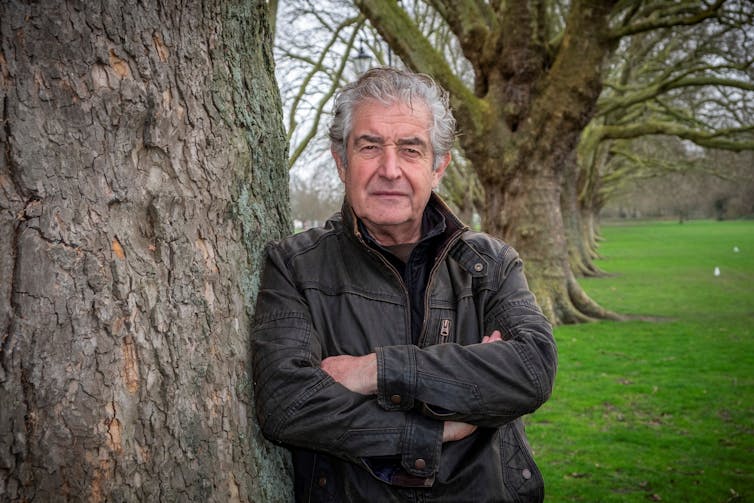
Tony Juniper.
Jason Bye, CC BY-NC-ND

Inequality – between the rich and poor or between the powerful and the weak – is the main factor stalling action on environmental problems including biodiversity loss, pollution and climate change, according to British environmentalist Tony Juniper.

In his new book, Just Earth: How a Fairer World Will Save the Planet, he argues that “if we want to build a secure future, both environmental priorities and social justice must be pursued together”. Much of this is about how decisions are made: “Disadvantaged groups rarely have a say, while those deciding on policy continue to comprise a narrow social segment.”

It is interesting to see Juniper’s views on the topic of a just transition, given his decades of experience. Juniper has served as the executive director of environmental charity Friends of the Earth, he was a Green party parliamentary candidate in the 2011 general election and previously led The Wildlife Trusts. He is currently chair of Natural England, the official government organisation working for the conservation and restoration of the natural environment.

His views on this subject certainly matter. His key message that social justice is at the heart of solving environmental problems helps to explain why we have collectively failed to address these.

This injustice is an issue that has been raised for decades by those most affected by environmental issues, those who work in the environment sector and academics like me who focus on environmental justice.

The UK environment sector, for example, is notoriously one of the least diverse, with only 3.5% of those working in environmental jobs identifying as an ethnic minority. In addition, the climate change movement is sometimes portrayed by the media as a middle-class preoccupation. Research shows a tendency for mainstream media to position environmentalism as a position of the wealthy. That’s reflected by the use of distancing terminology such as “middle-class tree huggers”.

However, 39% of UK working class voters experience climate anxiety. That’s only slightly below the 42% of middle-class voters.

Levels of climate concern have stayed high throughout both the COVID-19 pandemic and cost of living crises, while support for government action on climate mitigation policies, such as decreased meat consumption and flying, has remained steady.

At the global level, there have always been tensions between developed and developing countries in terms of what is “fair”. Entrenched power dynamics ensure that developed countries have historically won out when deciding what a fair future looks like.

Most recently, those tensions have been evident in the lack of clarity around how loss and damage will be funded and managed – who will pay out when an island disappears, or a village becomes inhabitable to due drought, for example? There’s also much debate around how a new finance goal should be defined, with huge disagreements between the developed and developing countries.

As Juniper explains, not only is it unclear what fairness means at global negotiations, there is clear evidence that these tend to favour the more powerful countries, such as the US or members of the EU, and create an unjust regime. Steven Vanderheiden, one of the earliest climate justice philosophers, claims that developing nations are usually offered a “take it or leave it” deal, such as the new finance goal of US$300 billion (£232 billion) or about half of what developing countries were asking for, once developed nations have made decisions without them.

A fairer vision

In response to these inequalities and ongoing tensions, Juniper sets out a vision for a fairer, greener society – also known as a just transition.

A just transition is hard to define. It was once a relatively well demarcated and clearly grounded concept associated with worker’s rights.

Over time, it has become an increasingly all-encompassing policy objective, untethered from any specific policies, political objectives or priorities. Indeed, while there are certainly overlaps between the different visions of a just transition, significant aspects directly contradict one another.

book cover, Tony Juniper Just Earth
Just Earth by Tony Juniper is out now.
CC BY-NC-ND

Many of the messages in Juniper’s book have been shouted by those less privileged for decades. By using his platform to amplify the importance of climate justice, he is striving to make a difference. However, the voices of those from affected communities in developing countries, the working class in richer countries, and women (who will be hardest hit by climate change) are somewhat absent.

Juniper neatly encompasses 40-plus years of global negotiations on climate change and biodiversity, reflecting on core issues blocking progress, such as populism and fossil fuel interests. Getting your head around negotiations is a complex task – and it’s one that Juniper executes very well.

Juniper also discusses rising inequality, especially post-COVID, and the intersecting relationship between affluence and environmental destruction, with the richest consuming far more than the poorest and the top 10% wealthiest individuals having emitting more greenhouse gases than the poorest 50%.

He sets out the impacts of consumption, particularly of the wealthiest, and the unfairness of those being hit hardest consuming the least. He carefully dissects why indefinite growth of GDP can no longer be taken as a given.

Then he sets out his vision for a just transition with a ten-point agenda, including new measures of progress. He suggests focusing on wellbeing and sustainable consumption, not GDP.

He highlights the importance of financing the future and raising the transition war chest – that involves carbon tax regimes and additional public resources for environmental protection to build climate resilience. He advises switching subsidies to green energy rather than fossil fuels, and also advocates for the use of ecocide law to protect future generations.

While progress is possible, Juniper is a realist. He outlines how much our culture needs to shift away from consumption, competition, devaluing nature, and towards a fairer society for all. As he puts it: “We have nowhere else to go. There is just Earth.”

——————————————-

This blog is written by Dr Alix Dietzel, Senior Lecturer in Climate Justice, University of Bristol Cabot Institute for the EnvironmentThis article is republished from The Conversation under a Creative Commons license. Read the original article.

African penguins could be extinct by 2035 – how to save them

African penguin on a beach
African penguin. Photo by Taryn Elliott via Pexels.

In October 2024, the African penguin became the first penguin species in the world to be listed as critically endangered by the International Union for the Conservation of Nature.

This is a sad record for Africa’s only penguin, and means it is now just one step away from extinction.

How did this happen? African penguins (Spheniscus demersus) are found only in Namibia and South Africa. Their numbers have been declining since the 1800s. At that time, they were burnt in ships’ boilers, their eggs were harvested and consumed as a delicacy, and their nests were destroyed by guano-harvesters seeking a rich source of fertiliser.

Such activities are fortunately no longer allowed. African penguins have been protected under South Africa’s Sea Birds and Seals Protection Act since 1973 (and more recently under the Marine Threatened or Protected Species Regulations since 2017).

These laws and regulations ban the capture of penguins or their eggs, and any intentional harm done to them. Fertilisers no longer use guano (penguin excrement). After egg and guano harvesting stopped, the lack of prey (small fish like sardines and anchovies) became the main issue for penguins from the early 2000s.

The impacts of climate change on the distribution and abundance of their food, and competition with industrial fisheries, have contributed to a 70% reduction in this penguin’s population between 2000 and 2024.

We are a group of scientists from universities and non-governmental organisations that have, for years, focused on solutions to save the African penguin. Today, unless the South African government takes urgent steps to protect the African penguin, it will likely become extinct in the wild by 2035. At present there are fewer than 20,000 birds left in the wild.

Penguins are like the canaries in the coal mine. They are disappearing because the ecosystem they rely on, together with many other species, including fish targeted by commercial fisheries, is in dire straits. By saving them, we protect their ecosystem and the other species that rely on it.

Penguins are also valuable to the economy, bringing in revenue from tourism.

What’s worked for the penguin so far

The destruction of African penguins’ nesting habitat over the centuries has been partly repaired by setting up artificial nests in penguin colonies. New research has found that these improve the number of penguin eggs that hatch by 16.5% compared to natural surface or bush nests which remain vulnerable to the elements.

Steps to protect the African penguins’ food supply also worked. One step was the experimental “no-take zones”, where the South African government prohibited fishing around the penguins’ breeding areas between 2008 and 2019.

The government closed commercial fishing of sardines and anchovies in a 20km radius around Robben Island on the west coast and St Croix Island in Algoa Bay for three years. During this time, commercial fishing around the neighbouring penguin colonies of Dassen Island and Bird Island was still permitted. The closure was alternated every three years until 2019 to see if it affected the penguin populations.

The results were positive. Penguins were able to catch fish with less effort and their chicks’ health and survival rates improved. The population increased by about 1% – a small increase, but very important, considering they were already endangered.

In parallel, the African Penguin Biodiversity Management Plan was published in 2013. The plan focused on managing predators, such as Cape fur seals and kelp gulls, and rescuing abandoned eggs and chicks. Thousands of individual penguins were saved and released into the wild over the years.

What has gone wrong for the penguin

Despite these efforts, the African penguin population fell faster from the mid-2010s. This was mostly due to the sudden collapse of the colony at St Croix Island, then the world’s largest African penguin colony.

This collapse coincided with the establishment of ship-to-ship bunkering activities (refuelling ships at sea rather than in ports) in Algoa Bay in 2016. While the ships were refuelling, four oil spills occurred.

Ship-to-ship bunkering also increased underwater noise pollution due to a ten-fold increase of maritime traffic in the bay.

Our previous research has revealed that African penguins are highly sensitive to underwater noise. Noise from ships or drilling equipment chases penguins away from their feeding grounds.

This also uses up the African penguins’ energy, often at a time when they have none to spare. Penguins need energy reserves before starting their annual moult, when they stay ashore for three weeks without eating to replace all their feathers. If they don’t find enough food before or after that stressful period, they die.

Can the African penguin be saved?

The experimental use of no-take zones in penguin breeding areas ended in 2019. A panel of international experts was then appointed by the South African government to review the experiment and suggest a way forward.

The panel said no-take zones should be put in place around all colonies. They recommended ways to balance the benefit to penguins against the cost to fisheries.

But the government departed from the panel’s recommendations and put in place fishing closures aimed at minimising economic losses to fisheries, and not conserving penguins. For example, they closed down fishing in some areas where penguins don’t hunt for fish.

In March 2024, the non-profit organisation BirdLife South Africa and the South African Foundation for the Conservation of Coastal Birds, represented by the Biodiversity Law Centre, asked the Pretoria high court to review and set aside the Minister of Fisheries, Forestry and Environment’s August 2023 decision on fishing closures around key African penguin breeding colonies. The case is still underway.

Meanwhile, bunkering in Algoa Bay has stopped temporarily after the South African Revenue Service detained five ships in September 2023 on allegations of breaching customs laws.

Subsequently, small increases in the St Croix Island penguin population have been seen for the first time in nearly ten years.

African penguins can bounce back when environmental conditions are good. Government and non-governmental organisations have worked hard to prevent various threats to penguins. But critical work remains to be done to protect their foraging habitat (the ocean around their colonies) from polluting activities.

Penguins also need protection from competition with industrial fisheries for fish supplies.

—————————–

This blog is by Lorien Pichegru, Adjunct professor, Nelson Mandela University; Alistair McInnes, Research Associate, Nelson Mandela University; Katrin Ludynia, Honorary Research Associate and Research Manager at SANCCOB, University of Cape Town, and Peter Barham, Professor emeritus, University of Bristol. Dr Lauren Waller of the Endangered Wildlife Trust contributed to this article.The Conversation This article is republished from The Conversation under a Creative Commons license. Read the original article.

Fresh reflection on COP 16 of the Convention on Biological Diversity

Margherita Pieraccini and Naomi Millner at COP16. Sat down and holding a block representing the SDGs,
Margherita Pieraccini and Naomi Millner at COP16.

As 2024 is drawing to a close, Conferences of the Parties (COPs) of three major Multilateral Environmental Agreements are happening in close succession: COP 16 of the Convention on Biological Diversity (CBD) was held between end of October and the beginning of November, COP 29 of the UN Convention on Climate Change (UNFCCC) is happening in mid-November, and COP 16 of the UN Convention to Combat Desertification will take place in early December.

Although exploring the synergies between these three COPs is of great importance and their close temporal proximity this year facilitates such discussion, I will focus solely on the CBD COP 16 as I had the opportunity to attend it in person as a University of Bristol academic observer.

CBD COP 16, held in Cali, Colombia started on the 21st of October and was due to end on the 1st of November. Negotiations overrun until the morning of the 2nd of November but they were suspended as the quorum was lost, leaving discussions on some key issues such as the strategy for resource mobilization to be resumed at a later date.

As biodiversity COPs are held biannually, COP 16 was the first COP since the adoption of the Kunming-Montreal Global Biodiversity Framework (GBF) at COP 15 in 2022. No one was expecting the negotiation of another major agreement at COP 16, with the key issue being the implementation of the GBF framework.

An introduction to the GBF

Differently from the Paris Agreement under the UNFCCC, the GBF is not legally binding.  Nevertheless, given that the boundary between binding and non-binding instruments in international environmental law is not always so clear-cut, the GBF has a central role in directing biodiversity law and policy. The GBF is a largely aspirational goal and target-oriented instrument. It contains four Goals to ‘live in harmony with nature’ by 2050 and 23 global Targets for 2030, split into three categories, namely ‘reducing threats to biodiversity’, ‘meeting people’s needs through sustainable use and benefit-sharing’ and ‘tools and solutions for implementation and mainstreaming’.  The Targets have different degrees of ‘quantifiability’, impacting also on Parties’ strategies and methodologies of implementation.

For example, the well- known ‘30 by 30’ target (Target 3) sets the threshold of 30% of the coverage of protected areas and other effective area-based conservation measures (OECMs) in terrestrial and inland water areas as well as marine and coastal areas to be reached by 2030. In contrast, Target 5, which still falls within the first category of ‘reducing threats to biodiversity’, is framed using a more general language: ‘ensure that the use, harvesting and trade of wild species is sustainable, safe and legal, preventing overexploitation, minimizing impacts on non-target species and ecosystems, and reducing the risk of pathogen spillover, applying the ecosystem approach, while respecting and protecting customary sustainable use by indigenous peoples and local communities.’

There are not only differences between Targets but the wordings of individual Targets themselves is sometimes contradictory, making for complex implementation as conflicting directions are suggested. For example, Target 19 pushes for the marketisation of nature, encouraging the private sector to invest in biodiversity and employing uncritically the language of green bonds and payments for ecosystem services, whilst, at the same, promoting the role of ‘Mother Earth centric action and non-market approaches’. Even if not all targets are rife with internal contradictions, other internal differences may exist, with some objectives expressed in a qualitative rather than a quantitative manner or by reference to concepts that lack unified legal definitions. This makes it more difficult to devise specific indicators, with the consequence that Parties will likely concentrate on the objectives requiring easier interpretative skills. For example, going back to the ‘30 by 30’ Target 3, the quantitative component is followed by references to ‘equitably governed systems’, which could mean very different things to different regulatory actors and there is still much work to be done on the identification of OECMs.

It should be recalled that this is not the first time the CBD employs the language of Targets and Goals. Notably, the CBD Strategic Plan for Biodiversity 2011-2020 included the Aichi Biodiversity Targets structured around 5 strategic goals, though most were not achieved and few partially achieved, as reported in the Global Biodiversity Outlook 5. COP 16’s focus on implementation was therefore crucial to avoid historical failures repeating themselves in 2030.

The spaces and voices of COP 16

COPs are notoriously busy and chaotic events. COP 16 of the CBD did indeed feel busy, with many side events happening simultaneously and in parallel to the formal negotiations of the two Working Groups and plenaries, as well as press conferences and Pavilion events. It was also the largest-ever CBD COP with some 23,000 registered delegates. Yet, the Conference Centre that hosted COP 16 in Cali was very capacious and the horizontal disposition of the spaces facilitated inter-ethnic, inter-generational, inter-disciplinary and of course inter-jurisdictional discussions under a Colombian sky often veiled by clouds.

It was a pleasant surprise to witness the high representation of youth, as well as indigenous peoples and local communities advocating for their rights and the rights of nature, though one may wonder if this was primarily due to the fact that COP 16 was organised in South America where the question of who is indigenous and who is not is not as contested as in other continents (such as Africa) and where youth environmental activism is thriving.

Side events also saw the participation of a plurality of voices, hosting delegates from a myriad of Inter-governmental organisations (IGOs) and Non-Governmental Organisations (NGOs), as well as researchers, Secretariat members and sometimes Parties. Thus, cross-fertilisation of ideas dominated the Conference with the hope that points made in side events by activists, academics, and others could filter through Parties to the negotiation tables. Indeed, many times in side events speakers addressed the audience as if it were an audience entirely made up by Parties’ delegates (seldom the case in practice), encouraging it to report back to the contact groups, which are closed working groups attended by Parties discussing draft texts of decisions.

Human rights as a framing device for different world-makings

The language of human rights pervaded the whole COP 16. This is a recent turn for the CBD, considering that the CBD itself and its instruments pre-GBF do not explicitly refer to human rights. In contrast, the GBF lists among the considerations for the implementation of the Framework a ‘human rights-based approach’. Section C 7(g) states in full that ‘the implementation of the Framework should follow a human rights-based approach, respecting, protecting, promoting and fulfilling human rights. The Framework acknowledges the human right to a clean, healthy and sustainable environment’. There are a few other references to human rights language scattered in the text. For example, in Target 22, reference is made to the ‘full protection of environmental human rights defenders’. The GBF’s explicit inclusion of human rights language and also the acknowledgement of a substantive human right to a clean, healthy and sustainable environment—which cross references the UN General Assembly Resolution of 28 July 2022—has solidified the link between human rights and biodiversity protection. Thus, it is not surprising that delegates at COP 16 used human rights language extensively.

In this context, it was interesting to observe that different groups internalised and strategically deployed human rights language to advance different, sometimes, but not always complementary, world-makings. Youth representatives referred to human rights as a tool for achieving inter-generational equity in biodiversity conservation; many indigenous peoples’ representatives employed human rights language to advance substantive claims such as rights to land and resources as well as procedural ones such as participatory rights in conservation decision-making; women representatives employed human rights language to address gender inequalities in conservation; some UN representatives strongly supported a human rights-based approach to area-based conservation as a means to avoid the tragedies brought about by ‘fortress conservation’; others used human rights language to reiterate key objectives of existing international law instruments.

The concept of human rights returned over and over in COP discussions intersecting with other reflections that unwrap the many lines around which biodiversity is framed and practiced by different communities and actors.

Outcomes and beyond

As mentioned above, COP 16 was suspended leaving for a later date, decisions on some critical issues, such as finance mechanisms and monitoring mechanism to measure Parties’ progress in achieving GBF Targets and Goals. Considering the slow implementation of the GBF- only 44 Parties have submitted revised National Biodiversity Strategies and Action Plans (NBSAPs), which are the main national implementation tools under Article 6 of the CBD- it is disappointing that decisions on budget and monitoring mechanisms have been left pending. However, there were also many achievements at COP 16, including:

  • the launch of the ‘Cali fund’ to operationalise the sharing of benefits from uses of digital sequence information (DSI);
  • decisions on Article 8(j), focused on traditional knowledge, innovations and practices of indigenous and local communities, including the adoption of a new Programme of Work on Article 8(j) and the establishment of a new permanent subsidiary body on Article 8(j);
  • a number of sectoral decisions, including one on the mechanism for identifying ecologically or biologically significant marine areas (EBSAs), which had been the subject of legal and political discussion for eight years.

The decisions related to Article 8(j) stand out considering the central role indigenous peoples and local communities play in the protection of biodiversity and the importance of including different epistemologies in biodiversity decision-making. During COP itself, there were arguments in favour and against the creation of such subsidiary body. Concerns revolved around questions such as ‘Why fixating on only one article of the CBD? Why a subsidiary body on this specific article and not others?’, ‘Would the subsidiary body silo indigenous peoples and local communities concerns?’, ‘Should indigenous peoples and local communities still be clustered together?’ Many counter-arguments were raised promoting the establishment of the subsidiary body as a way to legitimise and render more visible indigenous peoples and local communities’ practices turning these actors as policy makers instead of policy takers included in NBSAPs. The new subsidiary body’s modus operandi will be developed over the next two years, and it will be interesting to follow such development.

Outcomes are important, and in a goal and target-oriented environmental law world such as the one the CBD governance infrastructure presents, it is natural and logical to focus on what is achieved and what is not. However, the success of COP 16, like all COPs, should not solely be determined by its outcomes. It is essential to remember the spaces and the conversations that unfolded in between, the sharing of knowledge by a global community coming together for a few days from very different paths of life and with different agendas, a multitude unified by the shared concern of biodiversity loss, which continues at unprecedented rates and deserves everyone attention in COPs and beyond.

————————————–

This blog is written by Cabot Institute for the Environment member, Professor Margherita Pieraccini, Professor of Law at the University of Bristol Law School.

Margherita Pieraccini

How fly fishing strengthens our connection with wildlife and fosters conservation efforts

Whether it’s to reset our mental health or simply to take time out from the hurly-burly of work and urban life, many of us head for oceans and rivers to enjoy their restorative capacities.

Encountering wild animals in these blue spaces contributes to the beneficial effects of being in nature and forms the basis of tourist economies the world over.

Yet, how does our presence affect the creatures that call blue spaces home, and how do encounters with wild species change our relationships with natural environments?

River and stones with green trees and shade
The River Lyd, Devon. Avi Shankar

For nearly a decade, we have been researching human interactions with wild trout and salmon in the context of fly fishing. We spent months immersed in river environments both in the UK (the Lyd and Tamar in Devon, and the Usk and Wye in Wales) and North America (the rivers of the Gaspe region, Quebec and Lewisburg, Pennsylvania). We went fishing, observed and interviewed fly fishers, and learned as much as we could about fish behaviour.

In our recent paper, we explain how human interactions with fish can result in three kinds of interspecies encounters that strengthen people’s connections with wildlife and natural environments.

Separated encounters

Most often, wild animals remain indifferent to humans, driven as they are by natural motivations to feed and breed, within environmental habitats that humans do not fully understand.

For instance, Duane, a novice fly fisher we interviewed in Pennsylvania, didn’t know that trout eat aquatic insects: “I didn’t know squat … flies actually come out of the water?”

This lack of understanding of other species often ensures that wild animals remain undisturbed by human presence. Yet the elusiveness of creatures such as trout and salmon can also motivate people to find out more about them.

Slippery encounters

To improve their chances of catching fish, fly fishers learn about fish behaviour, river environments and the life cycles of the insects that fish feed on.

Equipped with this knowledge, fly fishers become better able to locate trout and salmon, and to select and cast a near weightless imitation “fly” designed to mimic a fish’s insect food.

Learning and honing these skills is a lifelong project during which fly fishers become savvy hunters with heightened abilities to sense what is going on in the water. Equally, fish learn too, becoming shy and ready to slip away from human contact.

Sticky encounters

On the rare occasions that fish are hooked, humans and fish enter what we call a “sticky encounter”. The mixed emotions of catching a wild salmon are captured in Annetta’s field notes:

I look down at this beautiful, majestic being. The fish is a fresh, healthy, silver, bright female … I look at her, she looks back at me … She wrangles free. She’s on a mission to spawn in her home river. I stand up but I’m weak in the knees. Full of pride, humility, and guilt.

Over time, these intense experiences of eye-to-eye contact can inspire fly fishers to consider the welfare of fish.

A wild Usk brown trout in a net
Netted: a wild Usk brown trout – most fly fishers now carefully return their catch back into the river. Avi Shankar

Fly fishers now release the majority of the fish they catch. Moreover, one fly fisher we interviewed explained that he has entirely removed the hooks from his flies, declaring: “I don’t want to catch that fish. I caught so many in my life. I know what the feeling is like.”

Stewarding blue spaces

It may seem ironic that fly fishers become passionate about conserving fish and river environments by practising what many people consider to be a cruel sport. Yet, fly fishers have first-hand experience of declining fish numbers.

Some of our interviewees spoke of trout and salmon as “canaries in the coal mine” – a warning sign of how river ecosystems are threatened by pollution, overdevelopment and climate change. In response, organisations such as the Wild Trout Trust and the Atlantic Salmon Trust highlight the necessity for conservation.

With wild populations of animals declining globally, the presence of humans in blue spaces deserves scrutiny. Nevertheless, interspecies encounters can change the relationship between people, fish and rivers from one of human gratification to one of reciprocity, stewardship and care.

—————————————-

This blog is written by Professor Avi Shankar, Professor of Consumer Research at the University of Bristol. It is republished from The Conversation under a Creative Commons license. Read the original article.

Avi Shankar standin in the street
Professor Avi Shankar

Are you a journalist looking for climate experts for COP28? We’ve got you covered

COP28 logo

We’ve got lots of media trained climate change experts. If you need an expert for an interview, here is a list of our experts you can approach. All media enquiries should be made via Victoria Tagg, our dedicated Media and PR Manager at the University of Bristol. 

Email victoria.tagg@bristol.ac.uk or call +44 (0)117 428 2489.

Climate change / climate emergency / climate science / climate-induced disasters

Dr Eunice Lo – expert in changes in extreme weather events such as heatwaves and cold spells, and how these changes translate to negative health outcomes including illnesses and deaths. Follow on Twitter/X @EuniceLoClimate.

Professor Daniela Schmidt – expert in the causes and effects of climate change on marine systems. Dani is also a Lead Author on the IPCC reports.

Dr Katerina Michalides – expert in drylands, drought and desertification and helping East African rural communities to adapt to droughts and future climate change. Follow on Twitter/X @_kmichaelides.

Professor Dann Mitchell – expert in how climate change alters the atmospheric circulation, extreme events, and impacts on human health. Dann is also a Met Office Chair. Follow on Twitter/X @ClimateDann.

Professor Dan Lunt – expert on past climate change, with a focus on understanding how and why climate has changed in the past and what we can learn about the future from the past. Dan is also a Lead Author on IPCC AR6. Follow on Twitter/X @ClimateSamwell.

Professor Jonathan Bamber – expert on the impact of melting land ice on sea level rise (SLR) and the response of the ocean to changes in freshwater forcing. Follow on Twitter/X @jlbamber

Professor Paul Bates CBE – expert in the science of flooding, risk and reducing threats to life and economic losses worldwide. Follow on Twitter/X @paul_d_bates

Dr Matt Palmer – expert in sea level and ocean heat content at the Met Office Hadley Centre and University of Bristol. Follow on Twitter/X @mpclimate.

Professor Guy Howard – expertise in building resilience and supporting adaptation in water systems, sanitation, health care facilities, and housing. Expert in wider infrastructure resilience assessment.

Net Zero / Energy / Renewables

Dr Caitlin Robinson – expert on energy poverty and energy justice and also in mapping ambient vulnerabilities in UK cities. Caitlin will be virtually attending COP28. Follow on Twitter/X @CaitHRobin.

Professor Philip Taylor – Expert in net zero, energy systems, energy storage, utilities, electric power distribution. Also Pro-Vice Chancellor at the University of Bristol. Follow on Twitter/X @rolyatlihp.

Dr Colin Nolden – expert in sustainable energy policyregulation and business models and interactions with secondary markets such as carbon markets and other sectors such as mobility. Colin will be in attendance in the Blue Zone at COP28 during week 2.

Professor Charl Faul – expert in novel functional materials for sustainable energy applications e.g. in CO2 capture and conversion and energy storage devices.  Follow on Twitter/X @Charl_FJ_Faul.

Climate finance / Loss and damage

Dr Rachel James – Expert in climate finance, damage, loss and decision making. Also has expertise in African climate systems and contemporary and future climate change. Follow on Twitter/X @_RachelJames.

Dr Katharina Richter – expert in decolonial environmental politics and equitable development in times of climate crises. Also an expert on degrowth and Buen Vivir, two alternatives to growth-based development from the Global North and South. Katarina will be virtually attending COP28. @DrKatRichter.

Climate justice

Dr Alix Dietzel – climate justice and climate policy expert. Focusing on the global and local scale and interested in how just the response to climate change is and how we can ensure a just transition. Alix will be in attendance in the Blue Zone at COP28 during week 1. Follow on Twitter/X @alixdietzel.

Dr Ed Atkins – expert on environmental and energy policy, politics and governance and how they must be equitable and inclusive. Also interested in local politics of climate change policies and energy generation and consumption. Follow on Twitter/X @edatkins_.

Dr Karen Tucker – expert on colonial politics of knowledge that shape encounters with indigenous knowledges, bodies and natures, and the decolonial practices that can reveal and remake them. Karen will be in attending the Blue Zone of COP28 in week 2.

Climate change and health

Dr Dan O’Hare – expert in climate anxiety and educational psychologist. Follow on Twitter/X @edpsydan.

Professor Dann Mitchell – expert in how climate change alters the atmospheric circulation, extreme events, and impacts on human health. Dann is also a Met Office Chair. Follow on Twitter/X @ClimateDann.

Dr Eunice Lo – expert in changes in extreme weather events such as heatwaves and cold spells, and how these changes translate to negative health outcomes including illnesses and deaths. Follow on Twitter/X @EuniceLoClimate.

Professor Guy Howard – expert in influence of climate change on infectious water-related disease, including waterborne disease and vector-borne disease.

Professor Rachael Gooberman-Hill – expert in health research, including long-term health conditions and design of ways to support and improve health. @EBIBristol (this account is only monitored in office hours).

Youth, children, education and skills

Dr Dan O’Hare – expert in climate anxiety in children and educational psychologist. Follow on Twitter/X @edpsydan.

Dr Camilla Morelli – expert in how children and young people imagine the future, asking what are the key challenges they face towards the adulthoods they desire and implementing impact strategies to make these desires attainable. Follow on Twitter/X @DrCamiMorelli.

Dr Helen Thomas-Hughes – expert in engaging, empowering, and inspiring diverse student bodies as collaborative environmental change makers. Also Lead of the Cabot Institute’s MScR in Global Environmental Challenges. Follow on Twitter/X @Researchhelen.

Professor Daniela Schmidt – expert in the causes and effects of climate change on marine systems. Dani is also a Lead Author on the IPCC reports. Also part of the Waves of Change project with Dr Camilla Morelli, looking at the intersection of social, economic and climatic impacts on young people’s lives and futures around the world.

Climate activism / Extinction Rebellion

Dr Oscar Berglund – expert on climate change activism and particularly Extinction Rebellion (XR) and the use of civil disobedience. Follow on Twitter @berglund_oscar.

Land / Nature / Food

Dr Jo House – expert on land and climate interactions, including emissions of carbon dioxide from land use change (e.g. deforestation), climate mitigation potential from the land (e.g. afforestationbioenergy), and implications of science for policy. Previously Government Office for Science’s Head of Climate Advice. Follow on Twitter @Drjohouse.

Professor Steve Simpson – expert marine biology and fish ecology, with particular interests in the behaviour of coral reef fishes, bioacoustics, effects of climate change on marine ecosystems, conservation and management. Follow on Twitter/X @DrSteveSimpson.

Dr Taro Takahashi – expert on farminglivestock production systems as well as programme evaluation and general equilibrium modelling of pasture and livestock-based economies.

Dr Maria Paula Escobar-Tello – expert on tensions and intersections between livestock farming and the environment.

Air pollution / Greenhouse gases

Dr Aoife Grant – expert in greenhouse gases and methane. Set up a monitoring station at Glasgow for COP26 to record emissions.

Professor Matt Rigby – expert on sources and sinks of greenhouse gases and ozone depleting substances. Follow on Twitter @TheOtherMRigby.

Professor Guy Howard – expert in contribution of waste and wastewater systems to methane emissions in low- and middle-income countries

Plastic and the environment

Dr Charlotte Lloyd – expert on the fate of chemicals in the terrestrial environment, including plasticsbioplastics and agricultural wastes. Follow on Twitter @DrCharlLloyd.

Cabot Institute for the Environment at COP28

We will have three media trained academics in attendance at the Blue Zone at COP28. These are: Dr Alix Dietzel (week 1), Dr Colin Nolden (week 2) and Dr Karen Tucker (week 2). We will also have two academics attending virtually: Dr Caitlin Robinson and Dr Katharina Richter.

Read more about COP on our website at https://bristol.ac.uk/cabot/what-we-do/projects/cop/
——————————
This blog was written by Amanda Woodman-Hardy, Communications and Engagement Officer at the Cabot Institute for the Environment. Follow on Twitter @Enviro_Mand and @cabotinstitute.

Watch our Cabot Conversations – 10 conversations between 2 experts on a climate change issue, all whilst an artist listens in the background and interprets the conversation into a beautiful piece of art in real time. Find out more at bristol.ac.uk/cabot/conversations.

Four ways winter heatwaves affect humans and nature

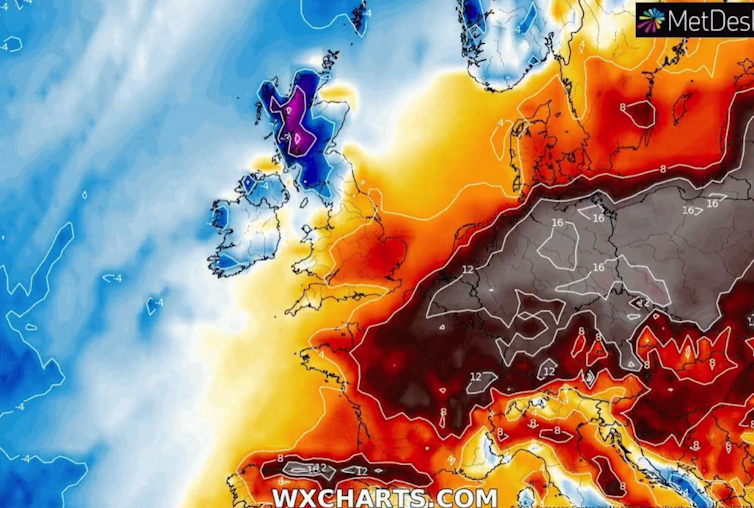
Temperature anomaly in Europe, Jan 1. Much of the continent was 10°C or more (dark red and grey) above the long-term average.
WX Charts, CC BY-NC

An extreme winter heatwave meant countries across Europe experienced a record-breaking New Year’s Day. New daily temperature records for the month of January were set in at least eight countries: Belarus, Czechia, Denmark, Latvia, Liechtenstein, Lithuania, Netherlands and Poland.

In many cases the temperatures were not just breaking the old highs, but smashing them by massive margins. On a typical January day in Warsaw, Poland, temperatures would barely go above freezing, yet the city recently experienced 19℃, breaking the previous January high by 5.1℃.

New January records were set at thousands of individual stations in many other countries such as 25.1℃ at Bilbao airport in Spain, 0.7℃ hotter than the previous record set only last year. Large areas of central and Eastern Europe experienced temperatures 10℃ to 15℃ warmer than average for this time of year – and that has persisted through the week.

When Europe experienced extreme heat in July of last year, more than 20,000 died. Fortunately winter heatwaves are much less deadly, but they can still affect both human society and natural ecosystems in many ways.

1. Less energy is needed

In Europe deaths due to cold weather vastly outweigh those caused by extreme high temperatures – in the UK there are ten times more. Warmer winters will reduce this excess mortality and, with the current cost-of-living crisis, many will have been relieved that a heatwave meant less energy was needed to heat their homes.

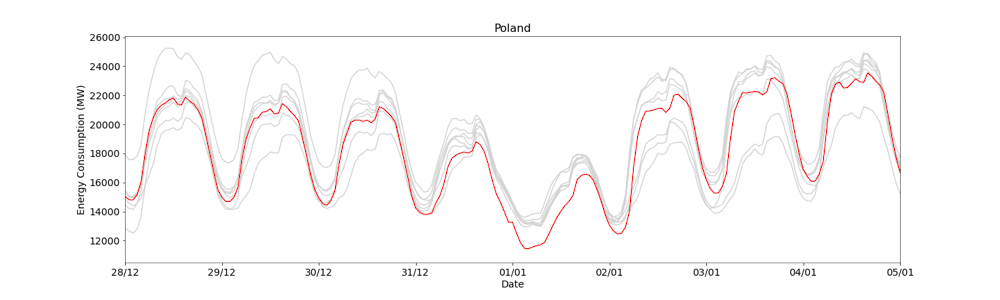
Electricity demand is influenced by things like the time of day, the day of the week and socio-economic factors like the COVID pandemic or the war in Ukraine. The weather also makes a difference. For example, in Poland and the Netherlands demand was noticeably lower than average, especially since January 1 was a Sunday. The extent of the heatwave also meant countries could refill some of their winter gas reserves, or large batteries.

Energy consumption in Poland December 28 to January 5. The red line shows the 2022-2023 heatwave period, and the grey lines show available data from 2015-2022.
Hannah Bloomfield / data: transparency.entsoe.eu, Author provided

2. Reduced yields for some crops

Winter warm spells don’t always have such a positive impact though. For instance a lack of snow in the mountains affects agriculture and can reduce crop yield, since snow creates an insulating blanket that prevents frost from penetrating into the soil. This means snow can actually increase soil moisture more than rainfall, thus improving growing conditions later in the season.

The big snow melt in spring time replenishes reservoirs and allows hydroelectricity generation, but unexpected snow melt can lead to flooding. Changes to the timings of these events will require preparation and adaptation to enable a steady supply of water to where we need it.

Warmer temperatures will create longer growing seasons in many regions. This is not always the case though. A recent study showed that for alpine grasslands an earlier growing season (the point when snow has melted entirely) leads to ageing and browning of the grasses in the later part of the summer.

3. The snow economy is in trouble

The heatwave caused ski resorts across the Alps to close in what should be their busiest time of year. In January the slopes would be expected to have a good covering of snow – but instead we saw green grassy fields.

This hits the local economy where many people rely on winter sports tourism. Events such as the Adelboden alpine ski World Cup are relying on artificial snow, which comes with a further environmental cost increasing the carbon footprint of ski resorts and requiring a large water supply. Indeed, the Beijing winter Olympics used the equivalent of daily drinking water for 900 million people to generate the artificial snow it required.

4. Animals out of sync with the climate

We humans are perhaps fortunate, as we are able to adapt. Some ski resorts have already opened mountain bike trails in winter to offer alternative tourism, but wildlife and ecosystems cannot adjust so rapidly.

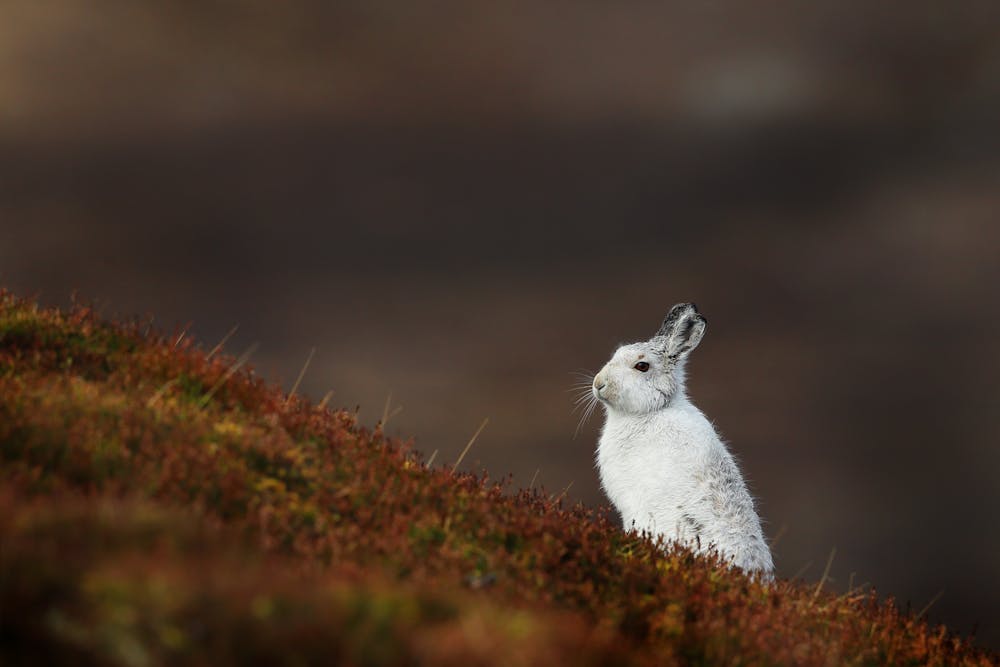
In the mountains many species, such as ptarmigan and mountain hares, change their colouring for winter to camouflage in the white snow. The timing of this change is determined by length of day – not the temperature or amount of snow. These creatures are at greater risk of being preyed on when it is warmer.

White rabbit, brown background
Mountain hares are dressed for a climate that has changed.
Mark Medcalf / shutterstock

Over the past century heat extremes in Europe have increased in intensity and frequency. Both the general warming and heatwave events have been firmly attributed to humans.

Future projections suggest these trends will continue and heatwaves in both summer and winter will get hotter, last longer, and occur more often. We need to learn to adapt for these changes in all seasons and think about the impacts on everyone – and everything – on our planet.The Conversation

—————————-

This blog is written by Cabot Institute for the Environment members Dr Vikki Thompson, Senior Research Associate in Geographical Sciences, University of Bristol and Dr Hannah Bloomfield, Postdoctoral Researcher in Climate Risk Analytics, University of BristolThis article is republished from The Conversation under a Creative Commons license. Read the original article.
The Farmer of Myddfai

Above the village of Myddfai, Escairllaethdy Farm stretches over 150 acres. The farm, which lies on the western edge of the Brecon Beacons at the foot of the Black Mountains, has been in Hywel Morgan’s family since his grandfather bought it after the Second World War. It’s an upland livestock farm, and Hywel also has grazing rights on the common land on Mynydd Myddfai for his sheep, horses, and, more recently, cattle. He describes himself as a hill farmer, and one who is especially passionate about the hills.

For the past five years Hywel has been gradually reducing the impact of his farming methods on the land. In an interview in March 2022, he told me more about how this came about. In the wake of Brexit, Hywel met with a Welsh civil servant and asked him what was really required of farmers in this new political context. The reply was that what the Government wanted was for farmers to farm “with nature”. This set Hywel on a journey of discovery that included a study-tour with the Farming Connect Management and Exchange scheme, investigating low-impact farming in Britain and continental Europe, as well as a visit to the Food and Farming conference in Aberystwyth, where he found disappointingly few farmers but did discover a stand for the Nature Friendly Farming Network. He decided to get involved.

Hywel’s move into lower-impact, nature-friendly farming has had a number of practical results. One is in the amount of hedgerow now on the farm. He explained: “I’ve put in about a thousand metres of double fencing every year for the past five years for hedgerow restoration, whether that is planting new hedges, coppicing hedges, or hedge-laying”. He has also been letting the hedges grow taller, sometimes leaving them for three years before cutting them. He says with a sense of pride, “All of a sudden I saw all these birds around in later winter”.  The beneficial effects of the hedges are visible in the summer too, reflected in the behaviour of the livestock. Hywel has noticed that on hot summer days his sheep and cows hide in the shade of the hedges, “and when the sun moves they move with the shade”. He adds, “Watching your animals tells you a lot”. He has also given up using artificial fertiliser and cut down on pharmaceuticals. Where he used to spray off a field of grass with Roundup and drill swedes for the sheep, he now conserves the grass for winter feed.

Farming in a nature-friendly way has involved some changes in the kind of livestock Hywel keeps on the land. He has introduced Highland cattle to his herd, and practises conservation grazing with all of his cattle. The Highlands live up on the hill and Hywel can already see how this stimulates greater biodiversity. In this respect cattle do better than sheep, “because sheep will nibble the short sweet grass right down. The cattle will just trample it for a start, and by trampling it they’re putting organic matter back into the soil and regenerating it a bit”. The hoof impact helps to create habitat for invertebrates and the browsing methods of the cattle “will leave a bit more over for nature”.

How much to leave for nature is a potentially difficult question given that farms are businesses and need to be run as such. Hywel admits that “production-wise it isn’t fantastic because you’re producing less meat per acre or per hectare”, but he argues with great conviction that “we have to have this balance of food production and nature – biodiversity and wildlife – and finding the sweet spot between biodiversity and productivity is key”.

Hywel’s relationship with this landscape is steeped in its history as well as invested in its future. Myddfai is a kind of hallowed ground, the ancient home of the legendary Lady of the Lake and the Physicians of Myddfai, The story of the mysterious Lady and her children, who began a tradition of healers in the village that continued for hundreds of years, was included in The Red Book of Hergest which dates from the late 14th century. Among other tales, the manuscript tells the story of the son of a famer killed fighting to preserve the independence of Wales, who while wandering along the edge of Llyn y Fan Fach, saw a beautiful woman sitting on the surface of the lake. He fell in love with her and wooed her with gifts of bread. On the third occasion, with the bread cooked exactly to her liking, the woman agreed to marry him and stay with him “until she received from him three blows, without any cause”.[i] It was a long time before the man landed the third blow on his wife, but true to her word, she left him and returned to the Lake. The story might be read as a stark warning against domestic violence. But there is a more positive kind of sequel. The couple had three sons and the mother sometimes appeared to them, teaching them about the medicinal qualities of the plants to be found in the area. The boys grew up to become skilful physicians who then recorded their knowledge in writing, “for the benefit of mankind throughout all the ages”.

In a quiet and modest way, Hywel thinks of himself as the inheritor this tradition of herbal knowledge. He has begun planting herbal leys in preference to rye grass because, as he says, “if I can’t grow them, who should?” As a society, we are probably only just beginning to discover how much can be learnt from the herbal medicines of the past. In part this is because the awareness of such sophisticated knowledge and wisdom has been obscured by more dominant, often urban-centric narratives. While the Enlightenment represented a huge advance in knowledge in some areas of the British Isles, the historian David Gange has written of how it benefited the big cities of the British Isles but actually heralded an age of darkness for other areas of the archipelago. In Wales it contributed to the suppression of the histories of the Age of the Saints, a period of intense Christian activity linked with learning and with the emergence of a deeply rooted Welsh culture.

Hywel takes inspiration from this ancient past as well as trying to draw on the practices of his own more recent ancestors. In some respects, regenerative farming means remembering agricultural methods from before the industrialisation of farming – which took place most significantly in the wake of the Second World War and the Agriculture Act of 1947. Farmers involved in nature-friendly farming often look back not to their fathers’ generation for wisdom but to that of their grandfathers and great-grandfathers, who were farming before the intensification of agriculture really took hold. In some ways, those generations modelled a way of life that seems preferable to the pressured lives of contemporary farmers. Hywel admits: “But hearing my father repeating stories about my grandad, his dad, I thought how fantastic life sounded. Hard, but just going up on a hill on horseback and chatting to a fellow grazier for hours and hours on end”. Now, in contrast, he says: “I feel like we’re just working. Like we’re running faster to stand still at the moment, because even at 15 I had my own sheep, and I pretty much had the same money then as I’m having now. It hasn’t changed. The price of fertiliser and feed and fuel and everything’s gone up crazy, but what we get for the end product hasn’t”.

The stories from the past, both ancient and more modern are significant. They speak of a tradition of farming on the Welsh uplands that has been in place for millennia. This tradition reflects a particularly deep relationship with the landscape built through hard toil and a commitment to learning the character of the land itself. Hywel’s story is an important counter to some of the current rewilding narratives that, at their most extreme, seem to suggest that the uplands would be better left untouched by farming of any kind. It is because of his careful stewardship that his land is flourishing.

Part of this process involves learning to see how the landscape might begin to heal itself. In a sense, Hywel is continuing in the tradition of the Physicians of Myddfai. Farmers like him are physicians of the land: wise practitioners who don’t impose a range of chemically based industrial-style remedies on the earth, but as the medieval Physicans of Myddfai were reputed to do, find ways of helping the patient through small interventions. This means moving away from the big-ag big pharma model in which agriculture is dominated by pharmaceutical companies and their agrochemicals, and thinking about what the land itself can do.

But regenerative farming does not just mean looking back in time. What struck me most when I first visited Esgairllaethdy was the way in which the wisdom of the past was being combined with some extraordinary contemporary technology. The Highland cattle on the hill wear collars fitted with GPS equipment. The collars enable Hywel to monitor where the cattle are and control their movement by setting up virtual fences using an app on his phone. When the cattle cross the boundary of the virtual field that Hywel maps out for them, the collars emit a high-pitched sound that causes them to step back into their allocated area. He tells me: “I think, in time, I’ll be able to manage without the collars, because the cattle will get used to the place”.

While Lyn y Fan Fach, the lake from which the legendary Lady emerged is two miles from Hywel’s farm, up on the mountain that adjoins his land, Hywel does now have a mini-lake of his own. He had always wanted a pond on his farm and two year’s into his membership of Glastir Advanced (a whole-farm sustainable land management scheme), he decided to build one. While some construction issues meant that the pond sometimes dries out, when the rain comes it creates a pool. After four days of heavy rain last Autumn, Hywel says, “the pond was full to overflowing”. He has witnessed how the pond has brought new species to the farm: “There was a duck there yesterday, there’s a heron, there’ll be Canadian geese, there’s all sorts of insects, dragonflies, around there”.

When I first visited Esgairllaethy in October 2021, I was at a low ebb: like everyone else, I was reeling from the practical and emotional effects of eighteen months of the pandemic, and from environmental fears prompted by the findings of the 2021 IPCC report and the figures for bioversity decline that came out before COP2021. But walking in the drizzling rain on the Open Farm Day walk, I felt buoyed up by an unexpected sense of hope. Here we were, in the midst of a vibrant landscape nurtured by a farmer whose deep love for the place and growing knowledge of its needs inform his farming practices. Species declining elsewhere are still present here and increasing in number – the hare, the curlew, and the skylark – and species new to the farm are arriving. With a newfound optimism, I thought of how the pond is providing a haven for passing waterfowl; how the Highland cattle on the hill are disturbing the ground, making new habitats for invertebrates and encouraging the growth of rare plants; and how the restored hedges are providing shelter for overwintering birds and shade for the livestock in summer. There’s a strong sense here of how the land is gradually recovering its health and how we in turn might heal our relationship with it.

————————–

Pippa Marland

Excerpts from the interview with Hywel Morgan are quoted here with his kind consent.

This blog is written by Pen and Plough researcher Dr Pippa Marland and is based on her interview with Hywel Morgan (https://thepenandtheplough.wordpress.com/2022/05/17/an-interview-with-nature-friendly-farmer-hywel-morgan-pippa-marland/) and published with his permission. Illustrations by Katie Marland. This blog has been reposted with kind permission from Pippa Marland. View the original blog.

Katie Marland is an artist and illustrator based between Bristol and London, where she recently completed her masters at the Royal Drawing School. Her practice is research-led, working from esoteric texts, medical history, museum collections and from close observation of the natural world. Her work can be found on her website, on instagram @kmarlandart, and on twitter @kmarlandart.

[i] Additional information about the stories of the Lady of Lake and the Physcians of Myddfai is drawn from Terry Breverton’s (2012) The Physicians of Myddfai: Cures and Remedies of the Mediaeval World (Carmarthenshire: Cambrian Books).

IPCC blog series – Working Group 2 – Impacts, Adaptation and Vulnerability


This blog is part of a series from the Cabot Institute for the Environment on the Intergovernmental Panel on Climate Change’s recent sixth Assessment report, with this post covering the output of Working Group 2 and the impacts of climate change on society and ecosystems. This article also features a chat with Prof Daniela Schmidt, a Professor at the School of Earth Sciences at the University of Bristol, and a Lead Author on the IPCC’s AR6 report. For links to the rest of the series, see the bottom of the post.

Welcome to the next post in this series on the IPCC sixth Assessment Report (AR6). Now that we’ve covered the background science to climate change, the next phase looks at the impacts on society, ecosystems, and the intricate fabric of everything in between – combining the science and aiding the transition of translating to policies that governments can implement to better the planet and mitigate the impacts.

This report is, in my opinion, the most alarming of the bunch – some scientists referring to this as the “bleakest warning yet”. Here are the key points:

The increased frequency of Extreme Weather and Temperature will have a cataclysmic impact – Everywhere will be affected

There is no inhabited region on earth that escapes the impacts of climate change. It’s estimated that over 3.3 billion people are living in areas highly vulnerable to climate change effects – largely extreme temperatures, leading to food insecurity and water shortages. Extreme weather events, such as tropical storms and flooding, are also set to increase in both frequency and severity.

As we’ve seen in recent years, wildfires have become more common (Australia and California making international news) and will continue to rise in frequency – wreaking devastation on communities and wildlife. This, along with the retreat of glaciers and polar ice caps, also results in a release of even more carbon to the atmosphere as the Earth’s natural carbon sinks continue to be dismantled. The ensuing feedback loop amplifies the warming, only serving to increase the severity of these events.

However, the impacts of climate change won’t be experienced uniformly across the planet…

The Impacts of Climate Change will not be experienced equally

This is one of the most important statements from all three Working Groups. It’s been well reported that sea level rise will be existentially cataclysmic for atoll island nations such as Kiribati and the Maldives, but there are other effects of climate change that will be unequally experienced. At the other end of the scale, Britain and other western European nations will see less drastic impacts, despite having some of the greatest contribution to the emissions at the root of the climate crisis. In summer, some parts of the globe are already becoming unliveable due to the extremely high temperatures. In India and Africa for example, where temperatures can exceed 40 degrees C, the number of deaths due to heat are increasing year on year. Poorer communities, especially those who work outdoors, are disproportionately affected as their occupation puts them at greater risk.

Some of the nations with the lowest development and therefore lowest contribution to climate change will experience the impacts more than some of the greatest contributors.

A Climate Crisis exacerbates other ongoing Crises

The effects of a climate crisis add an extra layer of complexity to all sorts of problems the world is already facing. Threats to food and water security because of climate change will increase pre-existing geopolitical tensions as resources become more and more scarce. Therefore, the likelihood of conflict and war increases – which in turn shift focus from fighting climate change. To some extent, we are seeing this already with the war in Ukraine, for example. In summary, climate change can increase severity of a crisis and limits the efficacy of response.

Impacts on ecosystems are already happening as well

Mass die-offs of species are well underway, particularly in oceanic ecosystems as sea temperatures rise and ocean acidification takes place. Deforestation and wildfires are destroying ecosystems.

When I spoke to Professor Daniela Schmidt, a lead author on the WGII report (more from her at the end of the article), she was quick to point out and stress the connections between nature and society, links often underestimated – “Negative impacts on nature will negatively impact people”. Nature, land-use, and conservation will be some of the key tools in helping mitigate the effects of climate change.

This is something to explore further with the next blog in this series on Working Group 3: Mitigation of Climate Change.

Insight from IPCC AR6 Lead Author Professor Daniela Schmidt 

Daniela Schmidt is a Professor of Palaeobiology, Cabot Institute member and a key author on the IPCC’s WG2 report.

How did you get involved with IPCC AR6 and Working Group II in particular?

“I was a lead author on the fifth assessment report, working on the ocean chapter. I have since worked on reports for the European Commission on food from the ocean. I volunteered for this cycle with the expectation of working with WGI but I was assigned work on WGII, which was challenging because it was way out of my comfort zone. Working on this report has changed the way I will conduct research in the future, and has taught me to be more open to the complexities of life”

What’s one key point you’d like to get across from the WGII report?

“The official key strapline from AR6 is that the evidence is clear, climate change is real and happening right now. It’s a rapidly closing window of opportunity to do something about it.”

“One of the main things I like to communicate is that if we don’t hit 1.5 degrees C targets, then 1.7 degrees C is still better than for 2 degrees C example. The point is that every increment matters and that we can’t give up if we miss targets. I think it’s important to tell people that if we are overshooting 1.5 degrees C, yes, there will be consequences, some of which are irreversible, but we can still come back.”

“I also try not just to talk about climate change. Much of the adaptation action for climate change incidentally will, in my view, help to make the world a better place – providing clean drinking water, clean energy, habitable homes and ensuring there is nature surrounding them

———————-

We recommend taking a look at the IPCC’s full reports and report summaries for yourself if you seek to further understand the evidence and reasoning behind their headline statements.

Going further, potential solutions and climate change mitigations will be covered in greater detail in our summary of WG3’s report titled “Mitigation of Climate Change”, will be the next blog in this series, featuring a chat with IPCC AR6 Lead Author Dr. Jo House and contributor Viola Heinrich.

————————–

Andy Lyford

This blog was written by Cabot Communications Assistant Andy Lyford, an MScR Student studying Paleoclimates and Climate modelling on the Cabot Institute Master’s by Research in Global Environmental Challenges at the University of Bristol.